
Disability income insurance · Florida & nationwide
Your home, your family's plans and your retirement all depend on one thing: your ability to earn an income. Disability insurance keeps a paycheck coming if an illness or injury stops you from working.
Independent Florida agent (W472056). Free, with no obligation to buy.
Free disability insurance quote
Start your quote in 3 taps
1What kind of work do you do?
2Your yearly income
3Your age
Next: tell us where to send your options. Takes about 2 minutes. Your information is never sold.
 Roger FishelYour independent agent. 20+ years helping Florida families.
Why Florida workers protect their income through Roger
Policies from several highly rated insurers, compared side by side, so you see the best fit for your job and budget.
One local advisor handles your quote. No call centers and no strangers calling you.
Coverage that can pay if you cannot do your own job, not just any job.
Protection that keeps your 401(k), IRA and savings on track, from a retirement planner.
FreeNo obligationQuotes in about 2 minutes
Why it matters
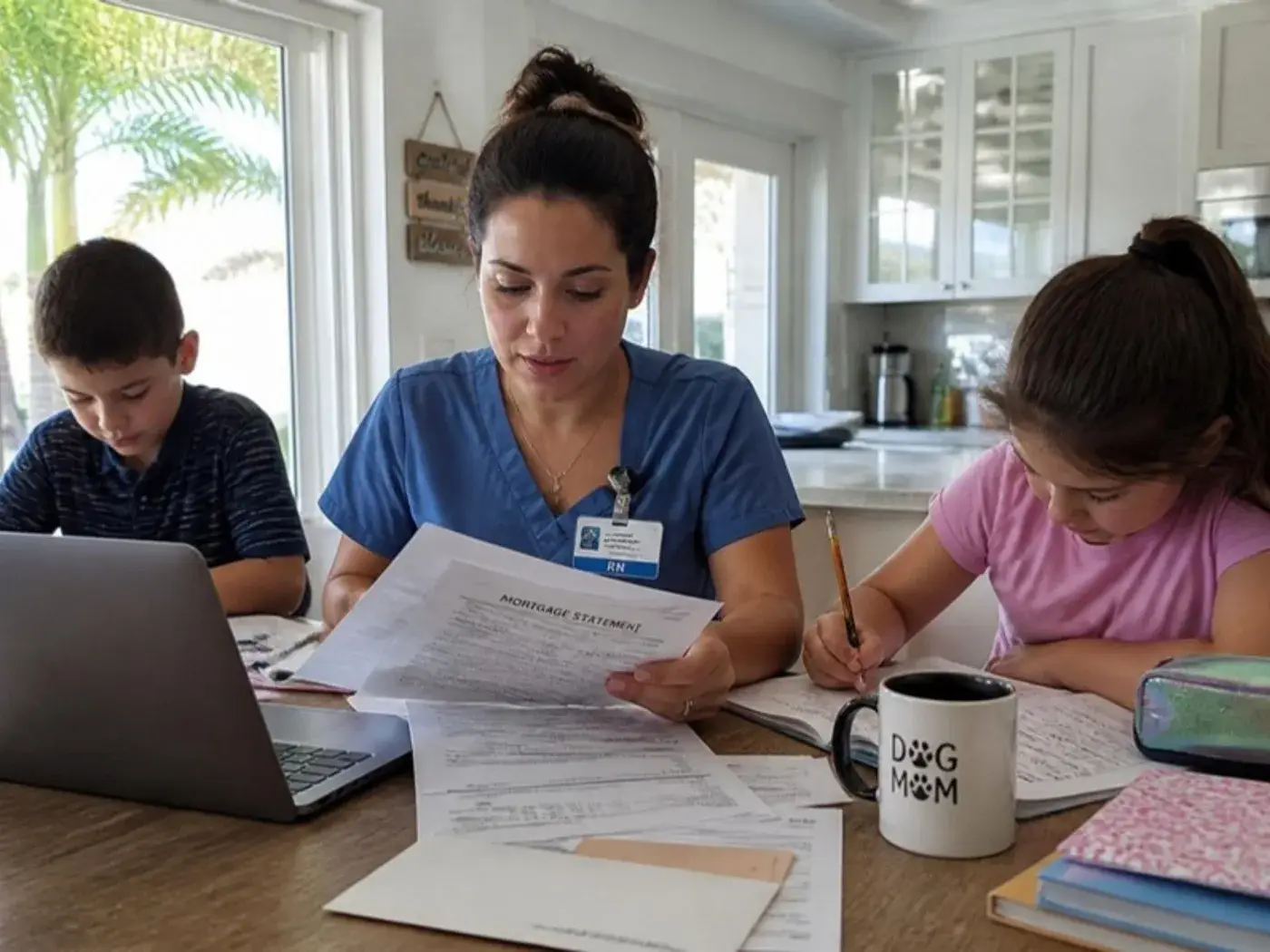
Your mortgage, your car, your kids' activities, your health insurance and every dollar you put toward retirement all come from the same place: your next paycheck.
Most people insure their home, their car and even their phone. But the thing that pays for all of it, your ability to earn an income, is often left unprotected. If your paycheck stopped next month, which of these would stop with it?
Disability and your retirement
A long illness or injury does not just interrupt this month's bills. It can quietly take years off the retirement you have spent decades building.
Without income protection
With disability income insurance
Hypothetical example
The difference: $374,000 less for retirement
Assumes age 45, $150,000 saved, $1,000 a month added and a hypothetical 6% yearly return. Without coverage, saving stops for three years and $40,000 a year is withdrawn to pay bills. Taxes and penalties, which would widen the gap, are not included. For illustration only; not a projection of any investment.
It happens more than you think
I have disability coverage through work.
Group coverage is a good start, but it often replaces only 60% of your base salary, may be capped, is taxable if your employer pays for it and usually ends when you leave the job. A personal policy fills the gap and goes with you.
Social Security will take care of me.
Social Security disability uses a strict definition: you generally must be unable to do any substantial work for at least a year. Benefits start after five full months, and the average check is about $1,630 a month.
Workers' comp has me covered.
Workers' comp only covers injuries and illnesses caused by your job. Most long disabilities come from illnesses like cancer, heart disease and back problems that have nothing to do with work.
I have savings to fall back on.
How many months could your savings cover every bill? And once that money is gone, the next source is usually your retirement account. Disability insurance protects both.
Disability insurance basics
The amount you receive each month, based on your income. Benefits are generally income-tax-free when you pay the premiums yourself with after-tax dollars.
Also called the elimination period: the days before benefits begin. A longer wait lowers your price.
How long benefits can last. Coverage to age 65 or 67 protects you from a career-ending disability.
Pays if you cannot do your own job, even if you could do another. Valuable for surgeons, dentists and other specialists.
A residual benefit can pay part of your benefit if you can work, but earn less while you recover.
Options like cost-of-living increases, future purchase rights, retirement protection and a non-cancelable guarantee.
Compare your options
| Question | Group coverage through work | Social Security disability | Your own individual policy |
|---|---|---|---|
| How much does it pay? | Often 60% of base salary, with a cap | About $1,630 a month on average | Commonly 60% to 70% of income |
| Are benefits taxed? | Usually, if your employer pays the premium | Can be, depending on your income | Generally tax-free when you pay the premium |
| When does it pay? | Often switches to "any job" after 2 years | Only if you cannot do any substantial work | Own-occupation options available |
| When do benefits start? | Usually after 90 to 180 days | After five full months, if approved | You choose, often 90 days |
| If you change jobs? | Usually ends | Based on your work history | Stays with you |
General comparison; features vary by employer plan, company and policy. Social Security figures from the Social Security Administration. Neither the firm nor its agents give tax advice.
How much does disability insurance cost?
Individual disability insurance commonly costs about 1% to 3% of your yearly income. In other words, protecting 100% of your future paychecks may cost a few cents of each dollar you earn.
Your price depends on:
Your ageYour healthYour jobBenefit amountWaiting periodBenefit periodRiders
Get My Exact Price| Yearly income | About 1% | About 3% |
|---|---|---|
| $60,000 | $50/mo | $150/mo |
| $100,000 | $83/mo | $250/mo |
| $150,000 | $125/mo | $375/mo |
Rule-of-thumb ranges for illustration, not quotes. Your price depends on your age, health, occupation, the coverage you choose and the company. A free quote shows your actual price.
Who it is for
If someone, including you, depends on your paycheck, your income is worth protecting.
No employer coverage and no sick pay. If you stop working, the income stops the same day.
Years of training and a high income make own-occupation coverage especially valuable.
When one paycheck supports the whole family, there is no backup plan without it.
Physical work raises the odds that an injury or back problem keeps you off the job.
Your saving years matter most now, and there is little time to rebuild after a setback.
A mortgage and children at home mean bills that cannot pause while you recover. Pair it with term life insurance.
A companion safeguard
Disability insurance replaces your income over time. Critical illness insurance pays a one-time cash benefit if you are diagnosed with a covered condition such as a heart attack, stroke or cancer, to help with deductibles, travel for treatment or everyday bills, without touching your retirement accounts. It can also fit alongside your healthcare plan.
Ask about critical illness coverage
How it works
Answer a few quick questions about your work and income. It takes about two minutes.
Roger shops benefit amounts, waiting periods and own-occupation definitions, and explains the differences in plain English.
Pick the coverage that fits your budget, with help through the application and approval.
No cost and no obligation to buy anything.

Frequently asked questions
Individual disability insurance commonly costs about 1% to 3% of your yearly income. Your price depends on your age, health, occupation, the benefit amount, the waiting period, the benefit period and any riders. A free quote shows your actual price.
Most individual policies are designed to replace about 60% to 70% of your income. Companies limit benefits so that you are not paid more than you earned while working.
Often, yes. Group coverage commonly replaces 60% of base salary up to a cap, is usually taxable when your employer pays for it and typically ends when you leave the job. An individual policy can fill the gap and stays with you.
Short-term coverage usually pays for a few weeks to a few months. Long-term coverage starts after a waiting period, often 90 days, and can pay for years or until retirement age. Long-term coverage protects you from the disabilities that do the most financial damage.
An own-occupation definition pays benefits if you cannot perform the main duties of your own job, even if you could work in another field. Any-occupation definitions are stricter and only pay if you cannot work in any job that fits your training and experience.
Benefits are generally income-tax-free when you pay the premiums yourself with after-tax dollars. Benefits from employer-paid coverage are usually taxable. Neither the firm nor its agents or representatives may give tax or legal advice.
Yes. Self-employed people and business owners often need it most because they have no employer coverage or sick pay. Companies usually look at your tax returns to set your benefit amount.
When your income stops, retirement contributions usually stop and many families turn to their retirement accounts to pay bills, which can trigger taxes and penalties. A monthly benefit pays the bills so your savings stay invested, and some policies offer a rider that keeps contributing to retirement for you.
Usually only a small part of it. Social Security disability uses a strict definition, starts after five full months and paid an average of about $1,630 a month in 2026. It works best as a base, not a plan.
Use the quote starter at the top of this page or call (407) 974-7100. Roger compares several top-rated companies and walks you through your options at no cost and with no obligation.